

supreme enlightenment : ค้นหาหนังสือธรรมะ
หน้าหนังสือทั้งหมด
136
Understanding the Inner Bodies on the Path to Enlightenment
them and go further through the centre until attaining the Body of Enlightenment — the most subtle of the inner bodies.
The inner bodies between the Paṭhama Magga Sphere and the Body of Enlightenment
This text delves into the various inner bodies that exist between the Paṭhama Magga Sphere and the Body of Enlightenment. These include the Subtle Human Body, Angelic Body, and several Brahma Bodies,
8
The True Nature of the Buddha's Enlightenment
the Buddha’s enlightenment dealt entirely with meditation focussed outside the body. Then, as now, almost all success was attributed to ideas and strategies — but as a result of countless past lifetim
Siddhattha Gotama's enlightenment was rooted in meditation that transcended mere conceptualization. He recognized that achieving true liberation demanded a harmonious blend of theory and inner virtue.
105
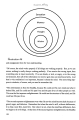
Understanding the Mind Through Meditation
…ike, and He could see His past lives and the past lives of other people as well. This was the first supreme enlightenment: He could see the structure of the mind, and He could see His past lives.
"The second supreme enli…
…the structure of the mind, including recognizing its defilements like greed and delusion. The first supreme enlightenment was the Buddha's ability to see his own mind and past lives, while the second was the realization o…
193
The Subtlety of Dhamma and the Buddha's Vocation
Dhamma in even greater subtlety. The Buddha was later to preach in the Simsapa forest that there were more leaves in the forest than he held in the palm of his hand. The 84,000 units of Dhamma which
The Buddha preached the concept of Dhamma, comparing his teachings to leaves in his hand versus the endless phenomena of enlightenment. He remembered his vow to end suffering, driven by compassion for
42
The Noble Eightfold Path and the Factors of Enlightenment
kings must accept with obeisance. This is because the Noble Eightfold Path is a supreme and noble practice.
2. A Wide Ocean: It can be compared to the wide ocean into which all rivers must flow. The
The Noble Eightfold Path is presented as a supreme practice in Buddhism, comparable to a vast ocean into which all rivers flow, embodying the essential Factors of Enlightenment. It comprises the Four
26
The Noble Truths and the Path to Nirvana
3. The Noble Truth of the Cessation of Suffering [dukkhanirodha ariyasacca];
4. The Noble Truth of the Path to the Cessation of Suffering [dukkhanirodhåkāmıni ariyasacca].
Apart from allowing Prince S
This text delves into the Four Noble Truths, emphasizing the cessation of suffering and the path leading to it. The Middle Way enables Prince Siddhattha to attain enlightenment and Nirvana while alive
202
The Importance of Contributing Buddha Images
examine this so that we will not miss the opportunity to do so.
We should clearly understand the importance of contributing
a Buddha image so that we do not obstruct our grandparents
when they wish to
This text emphasizes the significance of donating Buddha images as a means to contribute to spiritual merit. It discusses the historical context of such contributions, highlighting how ancestors showe
202
The Significance of Donating Buddha Images
examine this so that we will not miss the opportunity to do so.
We should clearly understand the importance of contributing
a Buddha image so that we do not obstruct our grandparents
when they wish to
This text emphasizes the importance of donating Buddha images as a means of showing gratitude towards the Lord Buddha and contributing to spiritual merit. It discusses the concept of Bodhisattas, indi
138
The Path to Enlightenment in Buddhism
grasping [räga], hatred [dosa] and delusion [moha]. When the mind is sufficiently pure to be released from these three defilements, the mind will attain the Formless Brahma Body.
The defilements assoc
This text discusses the process of achieving enlightenment in Buddhism, focusing on the overcoming of three main defilements: grasping (räga), hatred (dosa), and delusion (moha). It explains the attai
189
The Path to Enlightenment: Insights from Bahiya Dārucīriya
people cite examples of enlightenment such as that of Bahiya Dārucīriya who, in his final lifetime didn’t appear to mediate, but could become enlightened just by hearing a few words from the Buddha at
In examining the enlightenment of Bahiya Dārucīriya, it is essential to recognize his previous lifetimes where he dedicated himself to achieving enlightenment through intense meditation. Alongside fel
220
Exploring the Path to Enlightenment in Buddhism
101; enlightenment mechanism, chanting, Dhammacakkapavattana explained by Dhammakaya 111; Sutta 10-11, 209-16 knowledge arising to reach enlightenment 140-1; practice 94, metaphors: dog and lion 94; g
This text delves into various aspects of Buddhism, focusing on the mechanisms of enlightenment through chanting and the Dhammacakkapavattana Sutta. The practices necessary for attaining enlightenment
37
Understanding the Ten Right Views in Buddhism
Spontaneous Arising Beings Exist, & 10) The Buddha and Arahants Exist
One’s Kamma is accumulated in the human world and affects our birth circumstances in the next life. However, between lives we are
This text discusses the influence of kamma on rebirth and the significance of recognizing spontaneous beings in the celestial realm. It highlights the Buddha as the supreme enlightened figure and Arah
29
The Enlightenment of Koṇḍañña
his Enlightenment for the benefit of the ‘Group of Five’ — Enlightenment that is supreme in the human world, angel world, Māra-world, Brahmā-world, animal-world, world of monks, world of brahmins, wor
This text discusses the pivotal moment when Koṇḍañña achieved enlightenment after listening to the Buddha’s teachings, recognizing the nature of arising and cessation within himself. The earth-sprites
219
Understanding Suffering and Enlightenment in Buddhism
Angelic Body 107, 122; defilements by attaining Dhammakaya 111 of 135
bemoaning, as suffering 47, 58, 71,
anger 135, 136, 137 199; relationship to sorrow and lam-
animal kingdom, suffering of birth en
This text delves into key Buddhist teachings regarding suffering, attachment, and the process of attaining enlightenment. It analyzes various forms of suffering, including the suffering associated wit
233
Exploring Suffering and Enlightenment in Buddhist Philosophy
dying 58, 67-9, 199; of exposure to third absorption 129, 130, 131
hateful things 71-2; of illness, 12, thought, discursive, sense 96, 100
46, 57, 66-7, {metaphors: donkey thought-conception: discursi
This text delves into the intricate themes of suffering and enlightenment within Buddhist teachings. It explores the various aspects of suffering, including its origins and manifestations, and the pat
162
Glossary of Buddhist Terms
158 GLOSSARY
Mundane merit: merit gained through performance of good deeds, such as sweeping the temple, helping the poor, making charitable contributions.
Nibbana (Skt. Nirvana): the state of ultim
This glossary provides definitions and insights into crucial Buddhist terms such as Mundane Merit, which refers to merit from good deeds, and Nibbana, the ultimate state of happiness and enlightenment

126
Understanding Nibbana and Key Buddhist Concepts
Nibbana (Skt. Nirvana): the state of ultimate happiness, the happy condition of enlightenment, the highest spiritual attainment. This is not the sense-based happiness of the everyday livid; nor is it
Nibbana, or Nirvana, represents the ultimate happiness in Buddhism, transcending ordinary joy and marking the end of the rebirth cycle. It's a state of perfect enlightenment that goes beyond language,
215
The Tathāgata and the Cycle of Enlightenment
Yāva kivāñca me bhikkhave, imesu "O! Monks! If the Tathāgata had not fully com-
catusu ariyassaccevaṁ tiparivattaṁ completed these three cycles with their twelve com-
dvaḍasākāraṁ yathābhuṭṭaṁ nān
In this text, the Buddha addresses monks, emphasizing that he has fully completed the three cycles of truth, which affirms his status as a fully self-enlightened Buddha. He claims that this enlightenm

34
The Universal Love of the Lord Buddha
personal interest. It is the kind of love that the Lord
Buddha had after his enlightenment. Although he had
accompanied Princess Bimba for many lifetimes to
pursue Perfections, he could finally make a
The text reflects on the profound love exemplified by the Lord Buddha following his enlightenment. He released personal affections to pursue spiritual ordination and achieved enlightenment, marking th
67
Understanding Dhammakāya in Relation to Paccekabuddhas and Enlightenment
early texts that 'dhammakāya' must be singular. 100 In any case, the verse conveys the meaning that a Paccekabuddha has dhamma(s) as his body (or bodies), where 'dhammas' refers to the qualities perta
This study analyzes the term 'dhammakāya' and its relation to enlightenment. Dhammakāya is presented as a singular concept applying to both the Buddha and Paccekabuddhas, emphasizing that 'dhamma' ref